Handheld Sewing Machine Price in Pakistan: A Beginner’s Guide
A handheld sewing machine in Pakistan costs Rs 1,444 at Apni Dokaan (listed at Rs 2,889 before the store’s current sale). It is a battery-operated mini sewing machine made for quick fixes — hems, torn seams and small repairs — without dragging out a full-size machine. It comes pre-threaded and ready to use, so even a complete beginner can start stitching within minutes.
What Is a Handheld Sewing Machine?
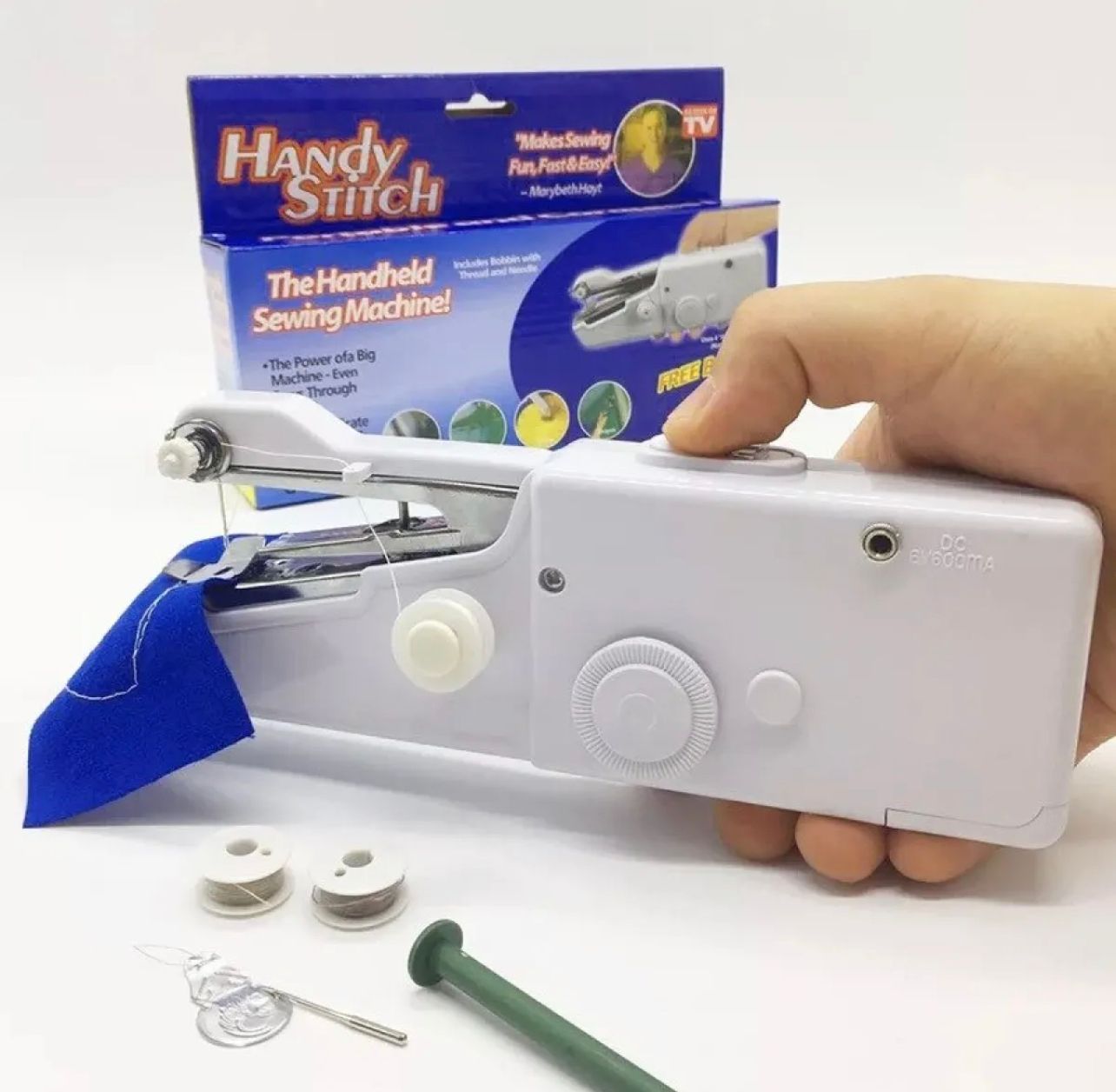
A handheld sewing machine is a small, palm-sized stitching tool that does the job of a regular machine on a much smaller scale. The Handy Stitch portable mini sewing machine fits in one hand, runs on batteries, and is light enough to keep in a drawer or carry in a travel bag. Instead of setting up a table, threading a bobbin and finding a power socket, you press a button and guide the cloth through.
It is a repair machine, not a tailoring machine. The product page is clear about this: it is made for small jobs and quick fixes, not as a replacement for a full-size sewing machine for large projects. That honesty is exactly what makes it useful — it does one job well.
How It Works
The machine comes pre-threaded, so there is no threading to learn before your first stitch. A rotary wheel and a tension control let you adjust the stitching, while the fastening plate holds the fabric steady as you sew. You press the button and guide the cloth, much as you would with a regular machine.
Because it runs on batteries, you can sew anywhere — at home, at a hostel, or while travelling — without a power socket nearby. A DC power adaptor can also be used, though it is not included in the box.
What Can You Sew With It?
According to the product page, this mini sewing machine handles everyday fabrics, hems and torn seams, and can also sew through tougher material such as denim, while staying gentle on delicates. In practice, that covers the repairs Pakistani households face most often:
- Trouser and shalwar hems that have come undone
- Torn seams on shirts, kurtas and school uniforms
- Curtain hems and small tears in bed sheets
- Quick fixes on bags and denim jeans
A sewing kit is included in the box, so you have extra thread on hand for your next repair.
How to Use It: A Beginner’s Step-by-Step
- Check the threading. The machine arrives pre-threaded. Before your first stitch, make sure the thread is in place and the needle is secure.
- Practise on scrap cloth first. Take an old piece of fabric and run a few straight lines. This is how you get a feel for the speed and the tension control.
- Place the fabric under the fastening plate. The plate holds the cloth steady, so keep the fabric flat and let the machine do the pulling.
- Press the button and guide, don’t push. Move the cloth slowly and steadily. Pushing or pulling hard is the most common beginner mistake and leads to uneven stitches.
- Adjust the tension if stitches look loose. Use the tension control in small steps until the stitches look neat and even.
- Finish the seam. When you reach the end, lift the machine off the fabric and tie off or trim the thread.
With a little practice, the stitches come out neat and even — the product page notes that even beginners get good results after a short learning curve.
Tips for Neat Stitches
- Start with light fabrics. Cotton lawn and cambric are forgiving; move to denim only after you are comfortable.
- Keep spare batteries ready. Because the machine is battery-operated, a weak battery is the most common reason stitches suddenly go uneven.
- Store it in its place. Its compact size is a real advantage — a drawer or a small pouch keeps it clean and ready. It also travels well, which is why it pairs naturally with a travel organiser pouch set for trips.
- Don’t force thick layers. It can handle denim, but several folded layers of heavy fabric are beyond a handheld machine. For those jobs, use a full-size machine or a tailor.
Who Should Buy One — and Who Shouldn’t
It is a good buy if you mostly need quick repairs: hems, torn seams, school uniforms, and small tears. It suits students in hostels, busy parents, and anyone who does not want to keep a full-size machine at home.
It is not the right tool if you sew full garments, stitch heavy curtains regularly, or need decorative stitching. For large projects, a full-size sewing machine is still the correct choice.
Frequently Asked Questions
How much does a handheld sewing machine cost in Pakistan?
The Handy Stitch portable mini sewing machine is listed at Rs 1,444 at Apni Dokaan (regular price Rs 2,889). Prices on the store can change with sales, so check the product page for the current price.
Is a handheld sewing machine easy for beginners?
Yes. It comes pre-threaded, and you simply press the button and guide the cloth. A little practice on scrap fabric gives neat, even stitches.
Does it need electricity?
No. It is battery operated, so it works anywhere without a power socket. A DC power adaptor can also be used, but it is not included.
What fabrics can it sew?
Everyday fabrics, hems and torn seams, and tougher material such as denim, while staying gentle on delicates. It is made for small repairs, not for large sewing projects.
Final Word
For Rs 1,444, a handheld sewing machine is a practical little tool for the repairs every Pakistani household faces — a fallen hem before school, a torn seam before a family function. It will not replace a full-size machine, but for quick fixes it earns its drawer space. See the full details and current price on the Handy Stitch portable mini sewing machine product page at Apni Dokaan.